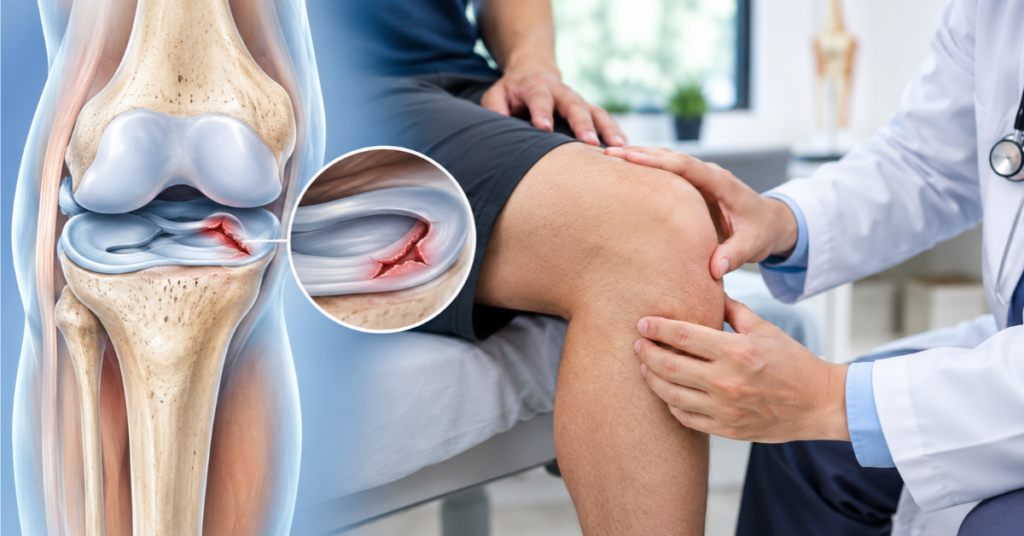
A lot of people with a torn meniscus wonder if they will have to have surgery. The answer will depend on how big it is, where it is, what pattern it is in, as well as your age and symptoms. An orthopedic doctor in Indore can examine your knee and guide you.
Blood supply is important
The outer part of the meniscus has a good blood supply and might heal better. The inner part is poorly or non-vascularized and usually does not heal by itself. Therefore, the location of the tear has a strong influence on treatment.
When conservative treatment may work
- Little, steady tears
- Degenerative tears in middle aged and elderly patients
- Mild symptoms without locking, because of tears
Treatment can include rest, ice, medications, activity modification, and specific physiotherapy to strengthen the muscles around the knee. A great many patients obtain relief without surgery.
When surgery might be needed
- The knee locks or catches again
- Conservative care with persistent pain for several weeks
- There is a large or displaced tear
- Other injuries, like an ACL tear, are involved
If you are facing such problems, an arthroscopy surgeon in Indore can do keyhole surgery to repair or trim the torn tissue.
Importance of Follow Up
The tear may not be completely healed even if the pain goes away. If you continue to have symptoms such as swelling or clicking, you should be re-evaluated.
Protecting your knees:
Keep your weight healthy, strengthen your thighs, warm up before exercise, and don’t squat deep or twist if your knee hurts.
If you suspect a meniscus tear, get a proper diagnosis so you can make an informed decision on whether to pursue conservative or surgical care.