
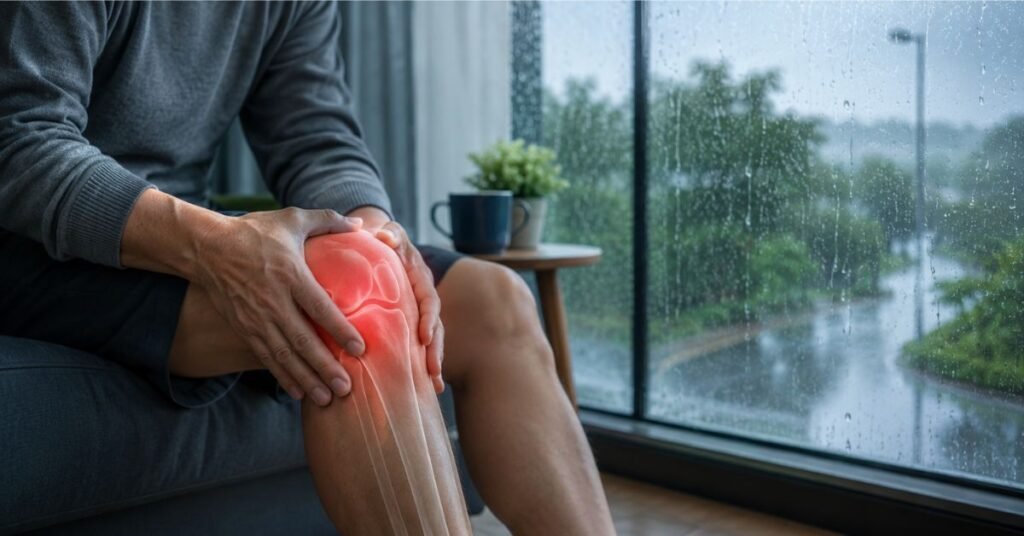
The first rain of the season often brings relief from the summer heat. The air feels cooler, the surroundings turn greener, and many people enjoy the change in weather. But for people living with arthritis or chronic joint problems, the monsoon can bring something else—more pain, stiffness, and difficulty moving.
If you’ve ever noticed that your knees, hips, shoulders, or hands ache more when it’s raining, you’re not imagining it. Many people report increased joint discomfort during humid weather. While scientists continue to study the exact reasons, several factors—including changes in humidity, atmospheric pressure, and reduced physical activity—may contribute to worsening arthritis symptoms.
At our orthopedic clinic in Indore, it’s common to meet patients who say, “Doctor, my knee pain gets worse every monsoon.” This pattern is seen in many individuals with osteoarthritis and other joint conditions.
The good news is that seasonal flare-ups can often be managed with the right combination of medical care, exercise, lifestyle changes, and timely evaluation. Understanding why this happens is the first step toward reducing pain and protecting your joints.
What Is Arthritis?
Arthritis is not a single disease. It is a term used to describe conditions that cause pain, swelling, stiffness, or reduced movement in one or more joints.
A joint is where two bones meet and move against each other. Healthy joints are protected by cartilage, a smooth tissue that acts like a cushion. Arthritis develops when this protective structure becomes damaged or inflamed, making movement painful.
There are more than 100 types of arthritis, but the most common ones include:
Osteoarthritis
Osteoarthritis is the most common form of arthritis. It develops gradually as the cartilage wears down over time. It usually affects weight-bearing joints such as the knees and hips but can also involve the hands and spine.
Rheumatoid Arthritis
This is an autoimmune disease in which the body’s immune system mistakenly attacks the lining of the joints. Unlike osteoarthritis, rheumatoid arthritis can affect multiple joints at the same time and may require long-term medical treatment.
Gout
Gout occurs when uric acid crystals build up inside a joint, causing sudden episodes of severe pain, redness, and swelling.
Post-Traumatic Arthritis
Sometimes arthritis develops after an injury such as a fracture, ligament tear, or sports injury. Even after healing, the damaged joint may develop arthritis years later.
Regardless of the type, arthritis can make everyday activities such as climbing stairs, walking, standing, or even opening a bottle much more difficult.
Does the Monsoon Really Make Arthritis Worse?
This is one of the most common questions orthopedic surgeon in Indore hear during the rainy season.
The answer is:
Many patients experience increased joint pain during the monsoon, although the exact biological mechanism is still being studied.
Research suggests that weather itself does not cause arthritis. However, changing weather conditions may increase pain in joints that are already affected by arthritis.
Several environmental factors may contribute to this increase in symptoms.
Why Does Humidity Worsen Arthritis?
1. Changes in Atmospheric Pressure
Before or during rainfall, the atmospheric pressure often drops.
Some researchers believe this lower pressure allows tissues surrounding the joints to expand slightly. When joints are already inflamed, even small changes may increase pressure on sensitive nerve endings, leading to more discomfort.
Although not every patient experiences this effect, many people notice that their joints begin hurting even before it starts raining.
2. High Humidity May Increase Joint Stiffness
Humidity refers to the amount of moisture in the air.
During the monsoon, high humidity can make muscles and surrounding soft tissues feel tighter. Combined with existing arthritis, this may contribute to increased stiffness, especially after waking up or sitting for a long time.
Many patients report that their knees feel “locked” or “heavy” during damp weather.
3. Reduced Physical Activity
Rainy weather often changes daily routines.
People spend more time indoors, walk less, and avoid regular exercise.
Unfortunately, joints need movement to stay healthy.
Less movement can cause:
Increased stiffness
Weakening of muscles supporting the joints
Reduced flexibility
More pain during daily activities
Even a few weeks of inactivity can noticeably affect joint function.
4. Muscles Become Less Flexible
Cooler temperatures during the rainy season may reduce muscle flexibility.
When muscles around the knee, hip, or shoulder become tight, they provide less support to the joint. This increases the workload on already damaged cartilage, making pain more noticeable.
Simple stretching exercises can often help reduce this problem.
5. Existing Inflammation Becomes More Noticeable
Arthritis already causes inflammation inside the joint.
During humid weather, fluid balance, reduced movement, and muscle stiffness may make this inflammation feel worse, even if the underlying arthritis has not progressed.
This is why many patients describe seasonal “flare-ups.”
Which Arthritis Conditions Are Most Affected During the Monsoon?
Although almost anyone with chronic joint disease may notice seasonal changes, certain conditions are more commonly affected.
Knee Osteoarthritis
This is one of the biggest reasons patients visit orthopedic clinics during the rainy season.
Common complaints include:
Pain while climbing stairs
Difficulty getting up from a chair
Morning stiffness
Swelling around the knee
Grinding or cracking sounds
Hip Arthritis
People with hip arthritis may notice:
- Pain while walking
- Difficulty putting on shoes
- Pain after sitting for long periods
- Reduced walking distance
Rheumatoid Arthritis
People with rheumatoid arthritis often experience:
- Joint swelling
- Morning stiffness lasting longer than an hour
- Fatigue
- Pain in multiple joints
Because RA is an autoimmune disease, seasonal changes may trigger symptom flare-ups in some individuals.
Previous Joint Injuries
Old fractures, ligament injuries, or sports injuries may also become painful during damp weather.
Even if the injury healed years ago, weather changes can sometimes make the affected joint more sensitive.
FAQs
What causes joint pain during the monsoon?
Joint pain during the monsoon is thought to be influenced by changes in humidity, atmospheric pressure, reduced physical activity, and muscle stiffness. These weather-related factors do not cause arthritis but may make existing joint problems more noticeable in some individuals.
How can I reduce arthritis pain during the rainy season?
Managing arthritis during the monsoon includes staying physically active, following a physiotherapy program, maintaining a healthy weight, taking prescribed medications, eating a balanced diet, and avoiding prolonged inactivity. If symptoms worsen, consult an orthopedic surgeon in Indore for personalized treatment.
Is monsoon joint pain a sign that arthritis is getting worse?
Not necessarily. Temporary increases in pain during the rainy season do not always mean that arthritis has progressed. However, persistent or worsening symptoms should be evaluated by a qualified orthopedic surgeon in Indore to determine whether your treatment plan needs adjustment.
Does losing weight really help arthritis?
Yes. Excess body weight increases pressure on the joints, especially the knees and hips. Even modest weight loss can reduce pain, improve mobility, and decrease stress on damaged joints.
Can exercise worsen arthritis pain?
Not when done correctly. Low-impact exercises and physiotherapy are among the most effective treatments for arthritis. High-impact activities may worsen symptoms, so exercises should be chosen based on your condition.
If your joint pain becomes worse every monsoon, don’t wait for it to affect your daily life. Book a consultation with Dr. Sanjay Rawat, Orthopedic Surgeon in Indore, for a personalized treatment plan.
Call: +91-9244044779
Speak with our team to schedule your orthopedic consultation.