
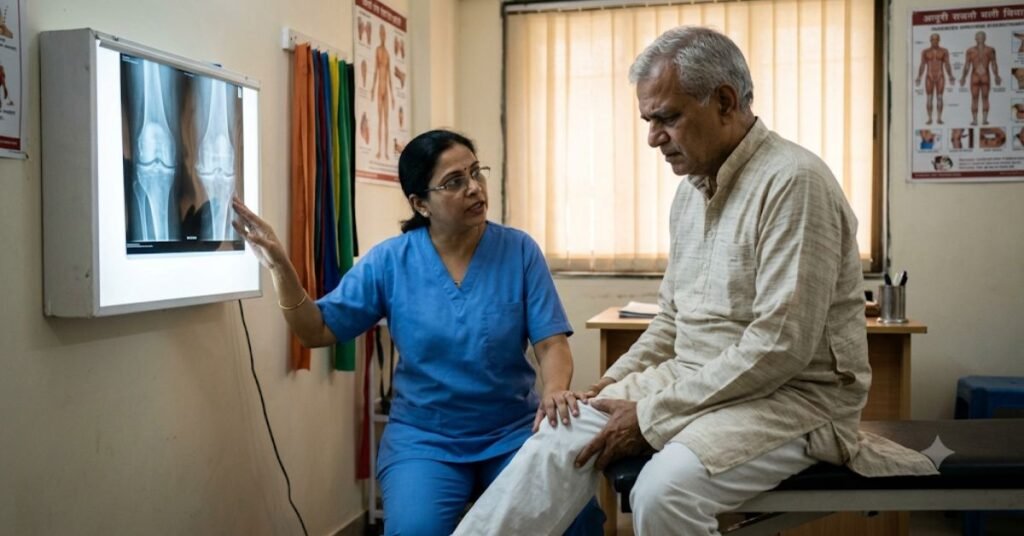
Physiotherapy can be very useful in managing knee arthritis, particularly when the goal is to increase strength and stay mobile. But sometimes, treatment by exercise alone may not be enough to relieve the symptoms.
Timing varies from patient to patient. It is determined by how much your joints are damaged, how severe your pain is, how mobile you are, your age, activity need and how you have responded to treatment already.
The Benefits of Physiotherapy
A physiotherapy program can include:
- Quadriceps strengthening
- Flexibility of the hamstrings.
- Range of motion exercises.
- Training for balance
- Walking mechanics:
- Weight training
Regular physical activity may promote function of the joints and help patients remain active.
When to Review Your Treatment?
Talk to your doctor about how you are doing if:
- The pain continues to get worse.
- It is getting harder to walk.
- You have ongoing nite pain.
- Stairs blow.
- Your knee becomes stiffer.
- You will have to change many things in your daily life.
- You need to take pain medicine often.
If the symptoms persist, it may be because the arthritis has progressed or the treatment needs to be adjusted.
What Can Your Orthopedist Evaluate?
Your doctor may check how your knee moves, its alignment, stability, strength, and the pattern of your pain. Imaging can provide information on cartilage loss, joint-space narrowing, deformity and other structural changes.
The decision for surgery should be based on the overall clinical picture, not solely on imaging.
When Can You Talk About Knee Replacement?
Some patients with advanced arthritis, significant pain, and substantial loss of function despite appropriate conservative treatment may be considered for knee replacement.
If you are thinking about consulting a best knee replacement surgeon in Indore, ask if your current symptoms and investigations indicate that it is time to think about joint replacement or if other options are still reasonable.
Continue with rehabilitation after surgery
Physiotherapy does not end with surgery. Rehabilitation following knee replacement is critical to regaining movement, strength, balance, and confidence.
The goal is not simply to get through a certain number of therapy sessions. The goal is to improve function in real life activities and help you return to appropriate daily activities.
Re-evaluation can help decide the next step if physiotherapy is not adequately controlling symptoms. The decision about what treatment you receive should be based on your condition and not simply on how long you have been attending physiotherapy.


