Not every damaged hip requires replacement of both parts of the joint. Sometimes only the ball of the hip is replaced, leaving the natural socket in place. This procedure known as partial hip replacement in Indore is a commonly used procedure for some fractures and selected patients.
Partial Hip Replacement: What is it?
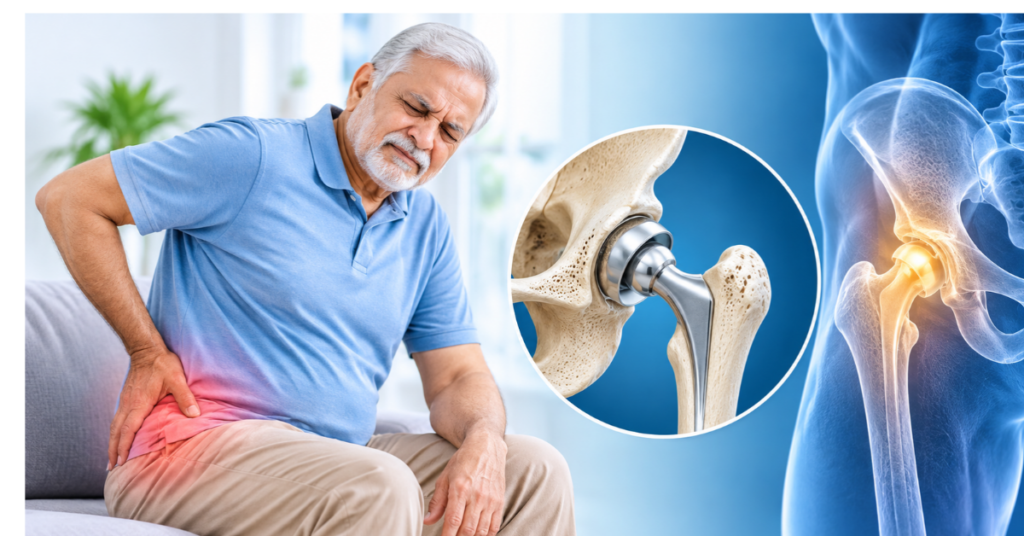
This operation, also known as hemiarthroplasty, removes the damaged femoral head and replaces it with a metal prosthesis that is attached to a stem that is inserted into the thigh bone. The patient’s own hip socket is preserved.
Who Can Be a Candidate?
The following are often considered for partial replacement:
- Displaced Fracture of the Femoral Neck
- Older patients with low activity requirements
- Healthy socket cartilage patients
- When a shorter, simpler operation is preferred
Benefits
- Reduced operation time
- less bleeding in many cases
- Less prone to dislocation than some other options
- Early standing and walking
- Fast return to normal daily activities
Limitations
Wear of the socket can occur over time, especially in more active or younger patients, because the natural socket is preserved. That is why the right patient needs to be selected.
Surgeon’s Assessment
The seasoned partial hip replacement surgeon in Indore investigates the age, bone quality, fracture pattern, activity level and socket health before suggesting this procedure. The choice of approach depends upon the physical examination and x-rays.
Expectations of Recovery
Most patients will begin walking with assistance shortly after surgery. Physiotherapy helps to improve strength and balance. Precautions are taken to protect the new joint in the early stages of healing. Follow ups are routine to ensure the implant is functioning well.
Partial hip replacement can be a good option if used in the right patient. If you or a loved one has suffered a hip fracture or hip damage, consult an orthopedic specialist to know which treatment suits your situation.