
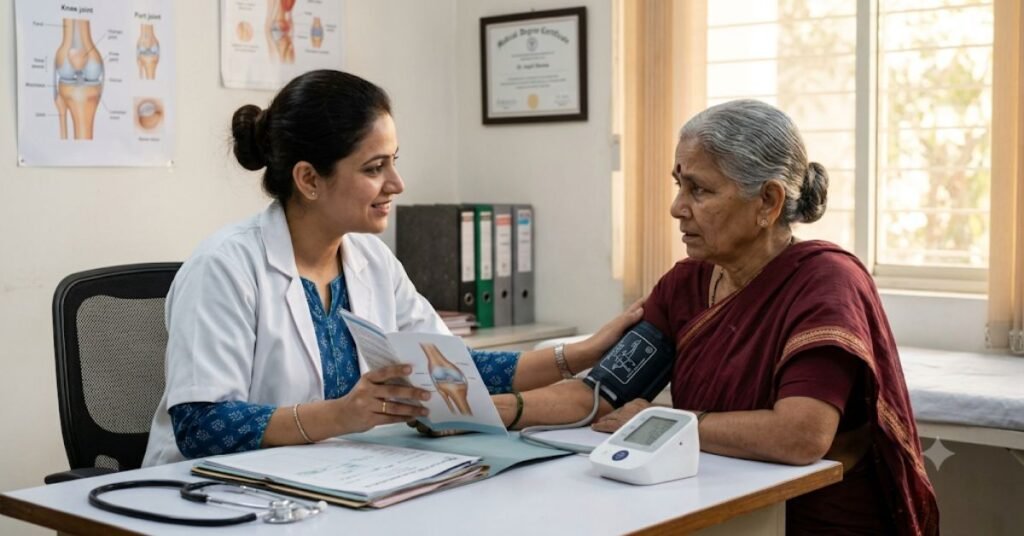
“High blood pressure is pretty common in adults, and it doesn’t automatically mean somebody can’t have a knee replacement. Blood pressure and overall cardiovascular health are important aspects of pre-operative assessment, however.
If you have high blood pressure and are considering knee replacement, your orthopedic surgeon may coordinate with your doctor or anesthesia team to make sure your condition is checked before the surgery.
Why do they check your blood pressure before surgery?
Surgery is a temporary stress on the body. “Knowing your blood pressure and cardiovascular history helps the medical team plan accordingly.”
Your assessment might look at:
- Measuring blood pressure
- Review of medication
- Heart assessment as needed
- Blood tests
- Other tests based on your medical history
Should You Stop Blood Pressure Medicines If You Have High Blood Pressure?
Never stop taking medicines prescribed for you on your own. Some medicines can continue, but some may need special instructions around surgery.
Your doctor and surgical team will tell you what to do.
What if blood pressure is poorly controlled?
If your blood pressure requires more treatment, you may need more medical planning before having elective surgery. It is contingent upon the situation of the individual when it happens.
That’s why patients should provide a complete list of medicines and medical conditions when consulting.
Knee arthritis and everyday life
Replacement is often considered by patients for:
- Difficulty walking
- Climbing stairs is hard
- Morning rigors
- Pain on standing
- Sleep disruption
- Reduced exercise tolerance
If these problems continue despite appropriate conservative treatment, joint replacement may be discussed.
A consultation with a knee replacement surgeon in Indore will assist you in assessing your knee condition and outline the process of surgery. Your doctor can also check your cardiovascular health and management of blood pressure.
Getting ready for surgery
Prior to the procedure:
- Take medicines as advised by medical personnel.
- Go for all the pre-operative tests.
- Tell the team about the past heart problems.
- Report any new symptoms.
- Follow instructions on medicines and fasting.
- Coordinate support for the early recovery period.
- Recovering from surgery
Gradual mobilization and physiotherapy are generally important after knee replacement. Your doctors may also keep an eye on your blood pressure and other medical conditions as you recover.
If you have high blood pressure, your surgery should be planned with your complete medical history in mind. A thorough pre-operative assessment allows your healthcare team to determine the appropriate preparation and follow-up requirements.


