
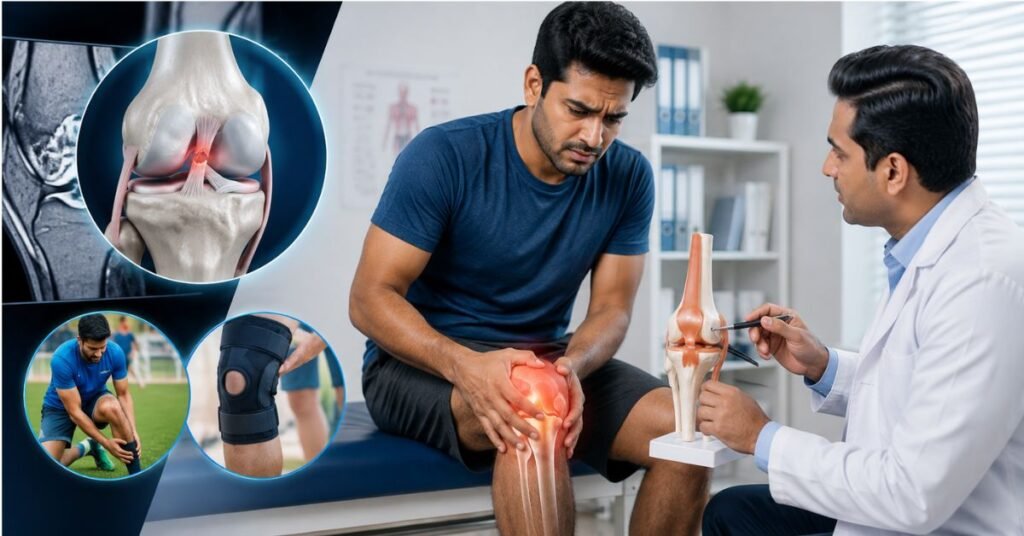
An ACL injury can cause pain, swelling, and a feeling that the knee may give way during walking, running, or sports. While some ACL injuries may improve with rehabilitation, persistent knee instability may require further orthopedic evaluation and, in some cases, surgical treatment.
What Is an ACL Injury?
The anterior cruciate ligament (ACL) is one of the major ligaments that helps stabilize the knee joint. A sudden twist, sports injury, fall, or direct impact can cause the ligament to stretch or tear.
Common symptoms include:
- Knee pain and swelling
- Difficulty putting weight on the leg
- A feeling of the knee giving way
- Reduced knee movement
- Difficulty returning to sports or physical activities
Why Does Knee Instability Occur After an ACL Injury?
A partially or completely torn ACL may not provide enough stability to the knee. This can cause the knee to feel unstable, particularly while changing direction, walking on uneven surfaces, running, or participating in sports.
Repeated episodes of knee instability should not be ignored because they may affect other structures within the knee, including the meniscus and cartilage.
When May Ligament Surgery Be Required?
Not every ACL injury requires surgery. The treatment depends on the type of injury, knee stability, activity level, age, associated injuries, and response to rehabilitation.
Ligament Surgery in Indore may be considered when:
- The ACL is completely torn and the knee remains unstable.
- The patient wants to return to sports or high-impact activities.
- Repeated episodes of the knee giving way occur.
- There are associated meniscus or other ligament injuries.
- Physiotherapy and rehabilitation do not provide adequate stability.
Can an ACL Injury Be Treated Without Surgery?
Some ACL injuries may be managed with rest, activity modification, physiotherapy, strengthening exercises, and rehabilitation. For selected patients, non-surgical treatment may provide adequate functional stability.
However, persistent instability or difficulty performing daily or sports activities may require further assessment.
How Is an ACL Injury Diagnosed?
Diagnosis generally involves a physical examination and assessment of knee stability. Imaging tests such as MRI may be recommended to evaluate the ACL and identify associated meniscus, cartilage, or other ligament injuries.
When Should You See an Orthopedic Specialist?
If your knee repeatedly gives way, remains swollen or painful after an ACL injury, or you are unable to return to normal activities, consult an orthopedic specialist. Timely evaluation can help determine whether rehabilitation or Ligament Surgery in Indore is appropriate.
For ACL injuries, knee instability, and other ligament problems, Dr. Sanjay Rawat can provide orthopedic evaluation and discuss suitable treatment options.


