
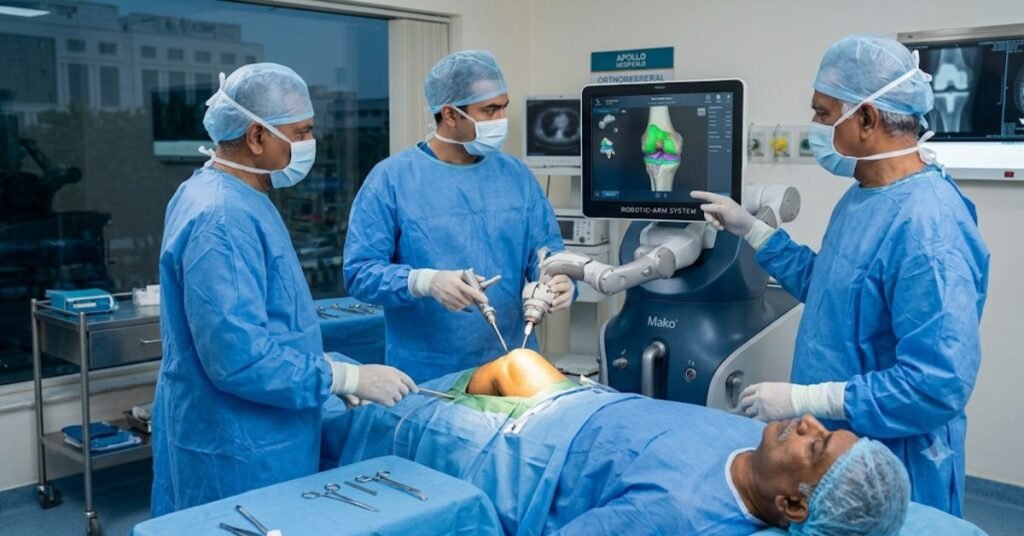
The term “robotic” may sound more automated than knee replacement. In robotic-assisted surgery, the orthopedic surgeon is still in charge. The technology is used to help with planning, measurements, and some surgical steps, but it does not independently diagnose the problem or decide what should be done.
What the Surgeon Does:
The surgeon will review symptoms and examine the knee, review imaging studies, determine if replacement is indicated, choose the implant system, and develop or approve the surgical plan. The surgeon uses the robotic platform as a guide in the procedure and makes the ultimate decisions.
What the Robotic System Gives
Depending on the technology, the system may be able to perform 3D planning, real-time measurements, or controlled guidance for bone preparation. These features could help the surgeon reproduce the planned position more accurately, but accuracy still depends on correct registration, surgical technique and clinical judgment.
Common are misunderstandings
- The robot does not replace the orthopedic surgeon.
- Robotic assistance does not imply that the surgery is fully automatic.
- Some patients are not candidates.
- The technology does not replace physiotherapy and follow-up.
Selection of Surgical Plan
For patients considering knee replacement surgery in Indore, the important question is not whether a robot is used, but whether the proposed technology is appropriate for the patient’s anatomy, the nature of the arthritis, and their treatment goals. This can be discussed in detail with the operating surgeon.
The best way to view robotic assistance is as an advanced surgical support system. The surgeon’s training, experience, planning, and patient selection are still central to the procedure.
Why the terminology is confusing
There are different robotic platforms, and the exact technology used may vary from hospital to hospital and surgeon to surgeon. Some are robotic guidance or controlled instruments. Some are planning and navigation. Patients can ask what the name of the system is and what it does, rather than assume that all “robotic” procedures are the same.
Human Decision-Making Still Central
The surgeon decides whether to replace, what surgical strategy to use, how to manage unexpected findings, and when the final position of the implant is acceptable. Such oversight by humans is important as no digital plan can substitute clinical examination and judgment in its entirety. The treatment decision and adaptation of the plan according to the findings during the surgery are the responsibility of the knee replacement surgeon in Indore.
Follow-Up and Safety
Robot assistance does not eliminate the usual risks of surgery, which include infection, bleeding, blood clots, stiffness, or the rare need for revision. Follow-up care and rehabilitation remain important components of care.


