
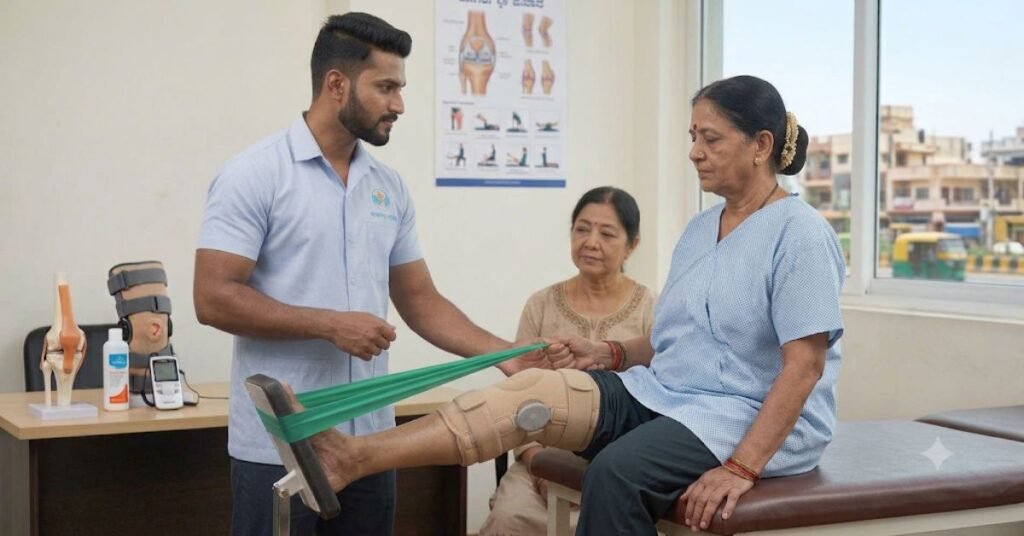
The term “bone-on-bone” is often used to describe very advanced cartilage loss in the knee. This might make it sound like surgery is needed right away, but the decision on treatment is made looking at the whole picture, including symptoms, exam findings, imaging, limitations in activities and response to conservative care.
What Non-Surgical Treatment Can Achieve
Non-surgical treatment cannot regrow severely lost cartilage but can reduce pain and improve function. Options include supervised exercise, strengthening, weight management where appropriate, activity modification, pain relieving medicines, topical treatments, walking aids, and in selected patients, injections.
Why Exercise Still Counts
If the pain is severe, patients sometimes cease to move their knees. Less activity can weaken the muscles of the thigh and hip to make movement in daily life more difficult. A physio program can target strength, flexibility, balance, and practical activities according to pain and medical restrictions.
When Surgery Is More Appropriate
- Pain is still significant even with proper conservative management
- Daily activities and walking become increasingly limited
- Nite pain or recurrent exacerbations interfere with normal life
- Imaging demonstrates widespread joint destruction and clinical findings are
- The patient understands the expected recovery and risks of surgery
Assessment
People looking for the best knee arthritis treatment in Indore should not decide based only on the phrase “bone-on-bone”. Some can manage symptoms for long periods without replacement while others with similar imaging may have significant functional limitations. After a complete assessment, a knee replacement surgeon in Indore can discuss whether surgery is appropriate.
The Bottom Line
Having bone-on-bone arthritis doesn’t mean you have to have surgery right away. Treatment is based on symptoms, function, overall health, and the goals of the patient.
When Conservative Care is Enough
Physiotherapy, activity modification, medication, weight management where appropriate and injections can enable some patients to maintain useful function. Some may still experience severe pain despite these measures. I have a few people who have had surgery. The decision to undertake surgery is usually driven by ethical and clinical considerations of the impact of symptoms on life, rather than imaging phrases alone.
A Shared Decision on Treatment
Patients should talk about the possible benefits, surgical risks, recovery demands, and alternatives with a qualified specialist. Good decision-making incorporates objective findings AND what the patient is actually doing. That way you don’t have to jump to surgery just because an X-ray looks bad.
The Role of Radiology
X-rays are useful to show the amount of loss of joint space and changes in bone. However, treatment should be guided by the entire clinical picture. A specialist can tell you if the imaging findings fit your symptoms and what reasonable options are at that stage.


