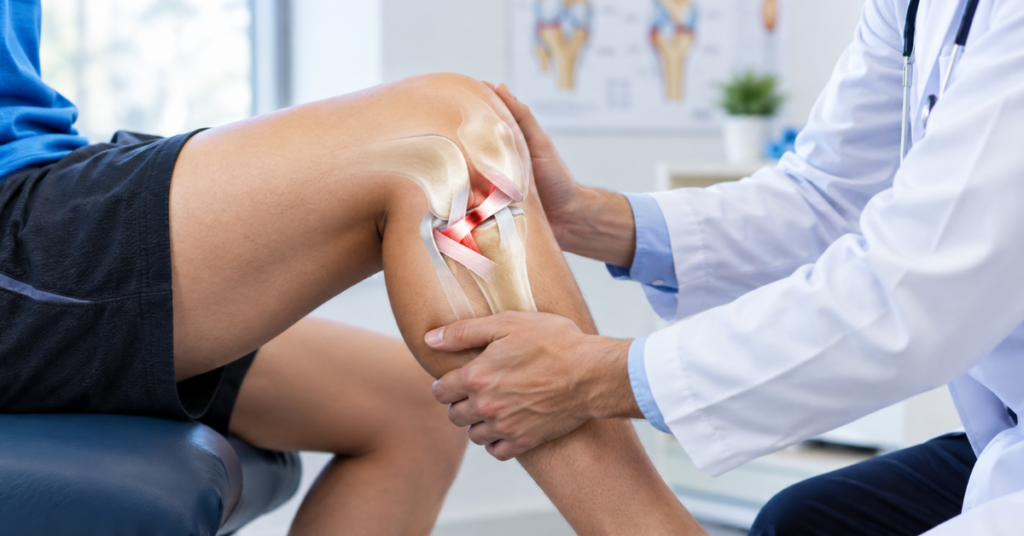
The knee has four major ligaments that keep it stable when walking, running, jumping, and twisting. If one of these is stretched or torn, the knee can become painful, swollen, and unreliable. An orthopedic doctor in Indore can help you find out which ligament is injured and suggest the best treatment.
Typical ligament injuries
- ACL (anterior cruciate ligament) – often injured during sudden stops or twisting PCL (posterior cruciate ligament) – typically from direct blow or road accident
- MCL (medial collateral ligament): injured by a lateral force to the outside of the knee
- LCL (lateral collateral ligament): rare, caused by force to the inside of the knee
Symptoms
- Pain and swelling immediately after injury
- A popping feeling when the injury happened
- Knee instability or buckling
- Tenderness of joints
- Trouble walking or weight-bearing
Diagnosis
Diagnosis involves a detailed history, physical stability testing and usually an MRI to confirm the ligament involved and identify associated injuries such as meniscus tears.
Choices of Treatment
Grade 1 and 2 sprains, and many MCL injuries, often respond to rest, bracing, medication, and physiotherapy. Full-thickness tears, especially of the ACL, may require reconstruction. An orthopedic surgeon in Indore will consider your age, activity level and knee stability before suggesting surgery. Most reconstructions are performed arthroscopically through small incisions.
Why early treatment is important
A knee that is chronically unstable can damage the meniscus and cartilage and increase the risk of early arthritis.
Rehabilitation.
Structured physiotherapy is essential for whatever the need for surgery and restores strength, balance, and confidence.
If you’ve injured your knee and it is swollen or unstable, book a consultation for an accurate diagnosis and a tailored recovery plan.