
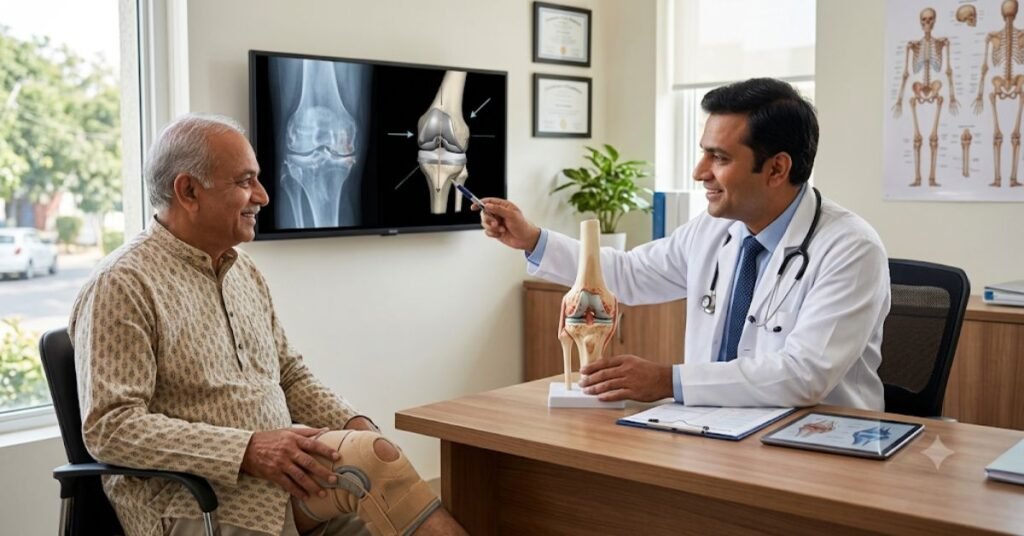
Advanced knee arthritis can lead to constant pain, stiffness, swelling, reduced walking ability, and problems with daily activities. Knee replacement may be an option when the joint is significantly damaged structurally, and symptoms are still limiting despite appropriate non-surgical care.
What is end stage arthritis?
In severe osteoarthritis, the protective cartilage that surrounds the surfaces of the joints can be greatly worn away. X-rays may show narrowing of the space in the joint, bone changes and other signs of degeneration. Symptoms and imaging are reviewed together because an X-ray finding alone does not decide if surgery is needed.
- Chronic pain that limits work, sleep, walking or other normal activities
- Stiffness that limits movement and function
- Symptoms that do not respond to appropriate non-surgical treatment
- Large joint damage observed on clinical and imaging assessment
- Lowered quality of movement or independence in daily life
Before your operation
The surgeon will review your medical history, medications, prior treatments, physical findings, and imaging. Depending on the patient, weight, blood pressure, diabetes, anemia, smoking, dental or other infection risk optimization may be discussed. Then the operation and rehabilitation plan are tailored for the patient.
Treatment is not always surgical
Physiotherapy, strengthening exercises, activity modification, weight management when required, medicines, walking aids, injections or other measures may be used for the treatment of knee arthritis in Indore. The best mix will depend on the type and severity of arthritis and the person’s symptoms.
Knee replacement is a reasonable next step for some patients with advanced arthritis after careful evaluation. The aim is to reduce pain and improve function, taking into account the risks and expected recovery from surgery.
What Recovery Means
Usually after replacement, rehabilitation begins with safe movement and gets gradually stronger. Patients may be taught exercises for knee motion, quadriceps activation, ambulation, and activities of daily living. Recovery time varies, especially if the patient has had severe arthritis for many years, or if the patient has other health conditions.
Setting Realistic Objectives
A good treatment plan should have practical goals such as walking better, using stairs easier, sleeping better, and being less dependent on pain medication. How this will turn out is different for each person, and the treating team should explain what the likely benefits are, as well as the limitations and risks. An Indore orthopedic surgeon can help you balance symptom relief, activity goals, surgical risks and the time it will take for you to rehabilitate.
Making Sense of the Decision
The decision to replace is usually made together after discussing the symptoms, examination findings, imaging, conservative treatment, surgical risks, and rehabilitation requirements. No single pain score or X-ray finding automatically determines the need for surgery.


