
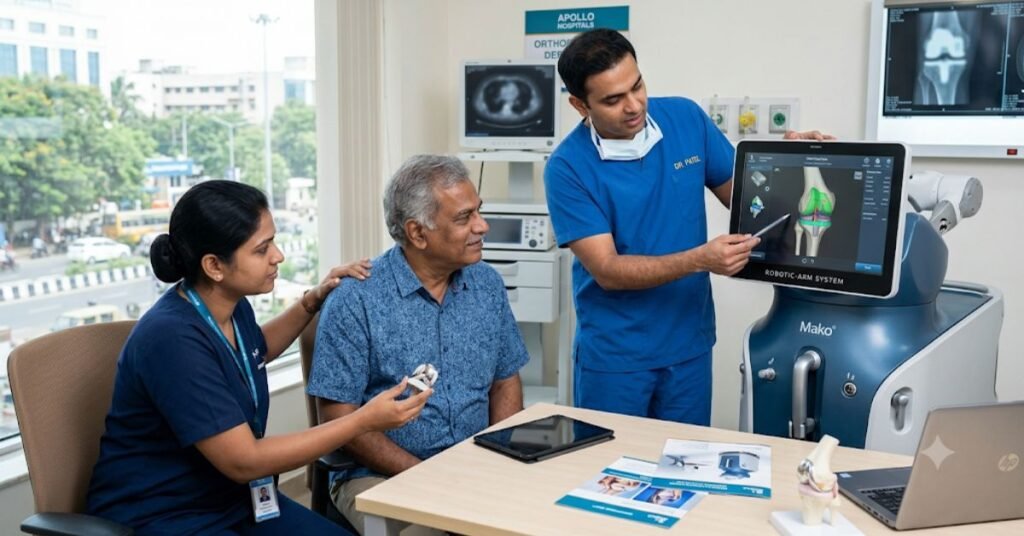
Robotic-assisted knee replacement uses a computer-guided system and the skill of a surgeon. The robot does not determine how it should behave with the knee. Instead, the system assists the surgeon in the planning and execution of certain parts of the procedure with detailed information about the patient’s anatomy.
Robotic assistance is used in the following ways:
A preoperative plan can be generated with imaging and anatomical measurements. The system can also help the surgeon during surgery to assess bone surfaces, alignment, and the intended location of the implant components. Depending on the platform and surgical plan, some steps of bone preparation may be guided or constrained by the system.
Why Accuracy Matters
Correct implant positioning and alignment are important as the knee replacement must function as a stable joint through normal movement. If the surgeon requires very detailed feedback or the patient has complex anatomy, robotic guidance may be helpful. This is still part of a bigger surgery.
Patient Key Takeaways
- Surgeon retains responsibility for procedure and final decisions.
- Robotic assistance does not eliminate the need for careful patient selection.
- Technology does not remove normal surgical risks and the need for rehabilitation.
- Expected benefits should be presented in the setting of the individual knee.
Who needs it?
Some patients have severe arthritis, alignment problems, or anatomy that can be improved by careful planning, and robotic assistance may be considered. Marketing claims don’t guide choice, clinical assessment does.
For patients in Indore considering Robotic Knee Replacement surgery, it is important to ask how the system will be used in their surgery, if it changes the implant or the recovery plan and what the expected outcomes are for their condition.
Robotic Assistance & Implant Planning
A very useful aspect of robotic platforms is the ability to work from a detailed surgical plan. The surgeon can verify the proposed size and alignment of the implant and can modify the plan based on intraoperative findings. This may be particularly helpful when there is an abnormal knee anatomy or a major deformity. An orthopedic surgeon in Indore can discuss the surgical plan with you and explain how the robotic platform will be used at all stages.
Recovery from Robotic-Assisted Surgery
The use of robotic assistance does not automatically mean a faster or painless recovery. Rehabilitation remains important, and patients should have realistic expectations. Postoperative recovery will continue to involve movement, strength, swelling control, wound care, and a gradual return to activities.
Discuss the evidence and the expectations
Patients should question what evidence exists to support the use of the technology for their specific procedure and what outcome the surgeon expects. This enables the distinction of clinically meaningful benefits from assumptions based solely on the word “robotic”.


