
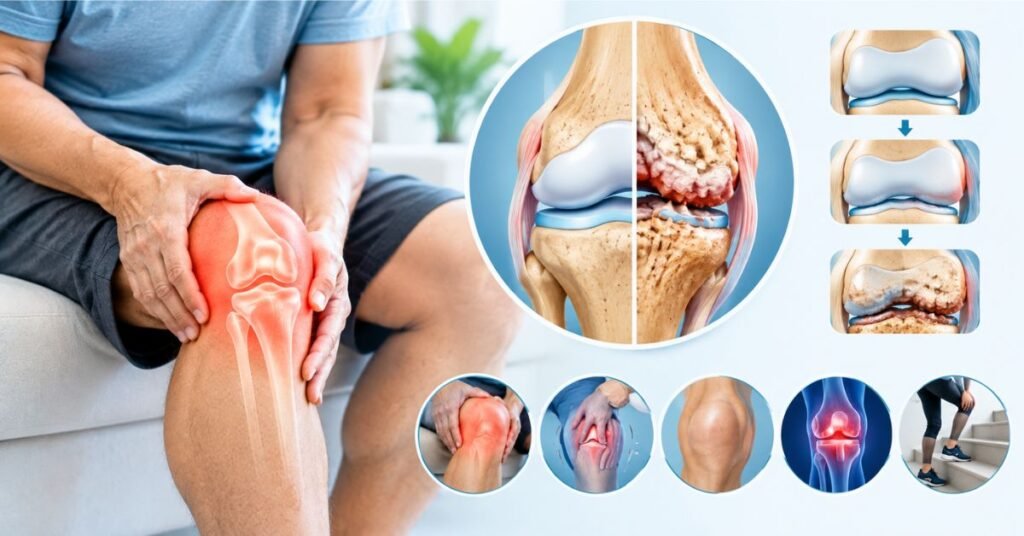
What Is Osteoarthritis of the Knee?
Knee osteoarthritis is the most common joint disease in adults, but many patients only understand what this really means when they have been living with the symptoms for years. In plain language, it is the gradual wearing away of the smooth cartilage that covers the ends of the bones in the knee joint so that they can slide against each other with little friction.
As this cartilage wears thin, the cushioning between the thigh bone, shin bone and kneecap decreases. Eventually the bones start to come together and at more advanced stages they can actually rub against each other. It is this friction, and the low-grade joint inflammation it produces, that causes the classic signs and symptoms of osteoarthritis: pain, stiffness, swelling and a gradual loss of the ability to flex or extend the knee comfortably.
Osteoarthritis usually progresses through identifiable stages:
Early stage: Stiffness, or mild discomfort, often after activity, with little change on x-ray
Moderate stage: Pain occurs more often; stiffness is noticed after rest, and there is visible narrowing of the joint space on imaging.
Advanced stage: Constant pain at rest, deformity and significant loss of joint space with bone-on-bone contact
The rate at which osteoarthritis develops in an individual is dependent on several factors, including age, body weight, past knee injuries, family history, and the physical demands of one’s daily work or activities. It is not only a disease of the elderly. Younger patients with old sports injuries or joint alignment issues can develop earlier than expected.
Diagnosis is usually straightforward, based on a clinical examination and a plain X ray to see how much of the joint space has been lost. Confirming this early with an orthopedic doctor in Indore helps to begin the treatment at the mildest stage, when options like physiotherapy, weight management, and activity adjustment are most effective.
Most patients change their approach when they realize that osteoarthritis is a slow, controllable process, not an inevitable decline. Generally, the best way to keep the joint comfortable and functional for the longest time possible is to get a clear diagnosis from the best orthopedic doctor in Indore and then follow a treatment plan that is specific to your stage.


