
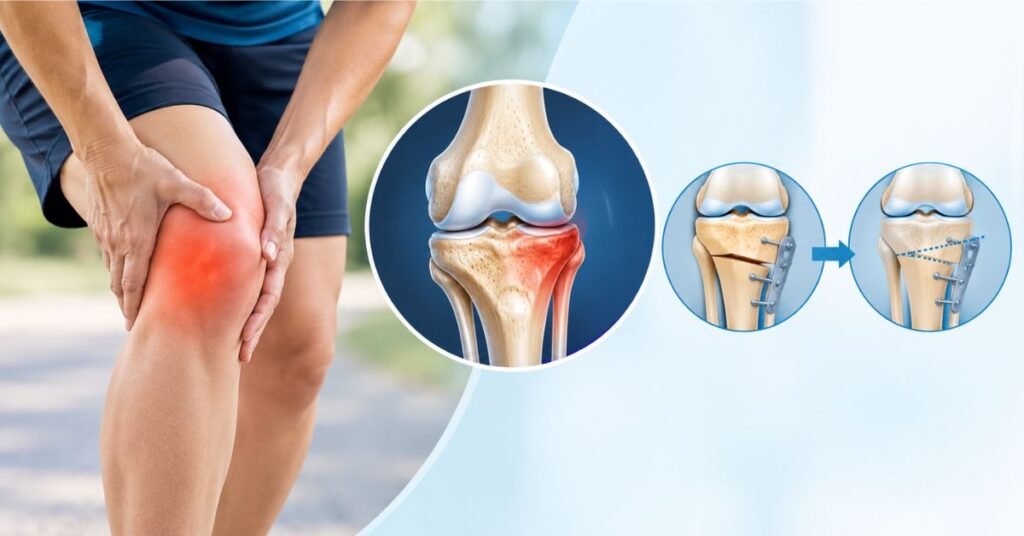
Is your knee pain mostly on one side of your knee particularly when you walk, climb stairs or stand for prolonged periods? It can just be a symptom of becoming older or of overall knee weakness. But pain that is more focused on one side of the knee can occasionally be associated with uneven wear of the knee joint.
High Tibial Osteotomy (HTO) is a joint conserving surgical treatment option for certain patients with particular kinds of knee arthritis. The treatment is not intended to replace the entire knee joint, but rather to alter the position of the leg and shift pressure through the knee.
If you are suffering from one-sided knee discomfort for a long time you can contact a knee orthopedic surgeon in Indore to see if HTO or any other treatment is right for you.# Why Does Knee Pain Affect One Side More?
The knee is meant to bear your body weight and spread it out over various regions of the joint. The leg’s alignment can vary or one compartment of the knee can be more damaged than the other, putting excessive strain on one side.
This could be because of:
Pain in the inside side of the knee mostly
- Pain on standing or walking
- Trouble ascending stairs
Knee stiffness
Swelling after exercise - Shorter walking distance to
- A new manner of walking
One-sided knee pain doesn’t indicate you need surgery. An orthopaedic assessment is needed to discover the cause.# What Is High Tibial Osteotomy?
High Tibial Osteotomy Surgery is a surgical treatment aimed at correcting the alignment of the knee and shifting the weight away from the injured part of the joint.
The surgeon makes a controlled adjustment in the upper part of the shinbone (tibia) throughout the treatment. Correction is designed in accordance with the leg alignment of the patient, the knee condition and the location of the injury of the joint.
The goal is to offload the afflicted area while retaining the patient’s normal knee joint.# Who is indicated for High Tibial Osteotomy?
HTO is not suitable for all patients with arthritis of the knee.
It may be considered for certain patients with:
Arthritis mostly in one compartment of the knee
- varus or other correctable concerns with knee alignment
- Constant knee pain interfering with daily life
Cartilage relatively maintained elsewhere in the knee - Desire to be physically active
- Adequate bone quality and general health
Your orthopaedic surgeon will consider your symptoms, physical exam, X-ray, alignment, age, activity level and general knee condition before prescribing HTO.
Can a high tibial osteotomy avoid knee replacement?
This is one of the most frequent questions patients ask.
HTO is a joint-preserving procedure in well-selected individuals, that may delay the need for knee replacement. But it’s not to be considered a sure-fire route to never needing a knee replacement.
HTO is indicated based on the amount and location of cartilage degradation, knee alignment, age, activity level and the general state of the joint.
You can take guidance from a knee orthopedic surgeon in Indore to find out if you are a right candidate or not.## HTO vs. Knee Replacement: What’s the Difference?
The primary distinction is that HTO tries to preserve your natural knee joint, whereas knee replacement includes replacing the damaged joint surfaces with artificial parts.## High Tibial Osteotomy
- Maintains the natural knee joint
- Fixes improper alignment
- Distributes pressure over the knee
- May be suitable for selected young or energetic patients
Is usually considered when the arthritis is restricted to one compartment## Total knee replacement - Replaces damaged joint surfaces
- May be suggested for advanced or extensive arthritis of the knee
- Can give great pain relief if the joint is badly damaged
- Considered when symptoms have a major effect on quality of life
The optimum procedure is dependent on the specific patient’s condition rather than age alone.When to See an Orthopaedic Surgeon? Signs to Look For
Consider an orthopedic assessment if you have:
- Chronic discomfort on one side of the knee
- Pain when walking
- Difficulty walking up stairs
• Increased knee stiffness - Swelling recurrent
- Visible shift in leg alignment
- Trouble participating in active activities
- Pain not relieved by physiotherapy or other conservative treatment
Early assessment can help identify if joint-preserving treatment may be appropriate.
Which tests are needed before HTO surgery?
Your orthopaedic surgeon may order imaging to see the condition and alignment of your knee.
Based on your symptoms, your assessment may consist of:
- Physical exam
- X-Rays (weight bearing)
- X-rays of long leg or alignment
- Evaluation of knee range of motion and stability
- Other imaging as clinically indicated
These tests help the surgeon evaluate where the joint is injured and if restoring the alignment can lessen stress on the affected area.## What Does Recovery After High Tibial Osteotomy Look Like?
The recovery period following HTO surgery in Indore depends on the surgical technique used, the health of the patient, the speed of bone healing, and the rehabilitation plan.
Possible recovery includes:
- Temporary use of walking aid or crutches
- Gradual return to weight-bearing
- Physical treatment
- Knee mobility exercises
- Exercises for strengthening
- Routine follow-up with orthopaedic team
Healing of the bone is a crucial element of recovery and patients should follow their surgeon’s advice about weight-bearing and activities.## Is High Tibial Osteotomy Better Than Knee Replacement?
Neither approach is always best.
HTO may be a better option for chosen individuals with localised knee arthritis and an alignment problem, particularly where preservation of the native knee is an important goal.
Knee replacement may be more suitable when arthritis is severe or involves numerous compartments of the knee.
To know the suitable solution complete evaluation by knee orthopedic surgeon in Indore is required.# Why opt for an experienced knee orthopaedic surgeon in Indore?
HTO necessitates accurate patient selection and exact planning, as the correction must be adapted to the patient’s knee alignment and the state of their joint.
An experienced knee orthopedic surgeon in Indore will analyse your symptoms and imaging and explain if High Tibial Osteotomy Surgery in Indore is appropriate or if alternative treatment may give better results.# Frequently Asked Questions
Who is a Candidate for High Tibial Osteotomy?
No . HTO is often reserved for a restricted group of patients with certain types of knee arthritis and correctable alignment abnormalities .
Is Knee Arthritis Fully Curable with HTO?
HTO will not fix an existing case of arthritis. Its goal is to realign and redistribute the strain on the knee, which may help decrease pain and preserve the natural joint.### Can HTO postpone knee replacement?
In carefully selected patients, HTO can postpone knee replacement, however the result varies among people.## Is HTO only for young patients?
Age is one issue but eligibility relies on other criteria including the location and severity of arthritis, alignment, exercise level, bone health, and overall health.
When to Opt for High Tibial Osteotomy in Indore?
If you suffer from chronic, one-sided knee discomfort and an orthopaedic evaluation reveals localised arthritis with an alignment problem, your surgeon may explore HTO as one possible therapy option.# Don’t Ignore Chronic Unilateral Knee Pain
Uneven joint wear or alignment issues can sometimes lead to pain on one side of the knee. This does not necessarily mean surgery is needed but ongoing symptoms warrant a thorough assessment.
If you are experiencing knee discomfort which is disturbing your walking, stairs, exercise or everyday routine then visit a orthopedic knee surgeon in Indore. Depending on your situation alternatives may include conservative treatment, High Tibial Osteotomy Surgery in Indore or knee replacement when clinically indicated.


