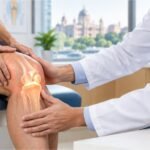

Walking is easy when the knee is healthy, but it is one of the first activities to become painful when arthritis sets in. Knowing why this happens can help patients understand their symptoms rather than just assuming pain while walking is just “part of getting older.”
With each step you take, your entire body weight goes through the knee joint. A healthy joint has a smooth layer of cartilage that cushions the impact and lets the bones glide over each other without friction. When arthritis destroys this cartilage, the padding effect is reduced. The bones start to get closer together and in more advanced cases, they start rubbing directly against each other, which is what causes the sharp or grinding pain that many patients describe when walking.
That’s why walking can be so painful compared to sitting down or just standing still.
- Weight-bearing load: Every time you take a step when you walk, two to three times your body weight goes through the knee
- Repetitive motion: The joint bends and straightens repeatedly, which worsens already inflamed tissue
- Loss of shock absorption: Thinner cartilage means less cushioning between bones when you apply pressure on them
- Muscle imbalance: Weak thigh muscles around a painful knee put extra strain on the knee joint itself
- Inflammation: Swelling within the joint capsule can make even small movements feel stiff and sore
Interestingly, the pattern of the pain often gives clues to the stage of arthritis. Pain that only occurs after walking a longer distance usually means wear in an earlier stage, while pain that starts within the first few steps and continues throughout the walk often means more advanced joint damage. Other patients feel they have more pain when walking on uneven surfaces or slopes, because they need more joint stability than on flat surfaces.
To properly treat this pain, we need to know exactly which part of the joint is affected and how much cartilage is left. The best way to do this is by clinical examination and X-ray, not by self-diagnosis. An orthopedic surgeon in Indore can diagnose whether the pain is due to cartilage wear, ligament strain, or a mix of causes, and then devise a treatment plan accordingly. This may include specific physiotherapy, the use of bracing, or, in more severe cases, surgical interventions.
If you find yourself walking becoming a chore rather than something you do automatically, it is worth getting the joint assessed properly. Seeing the best orthopedic surgeon in Indore early generally means easier treatment and a better chance of keeping the joint functional for a longer period without surgery.