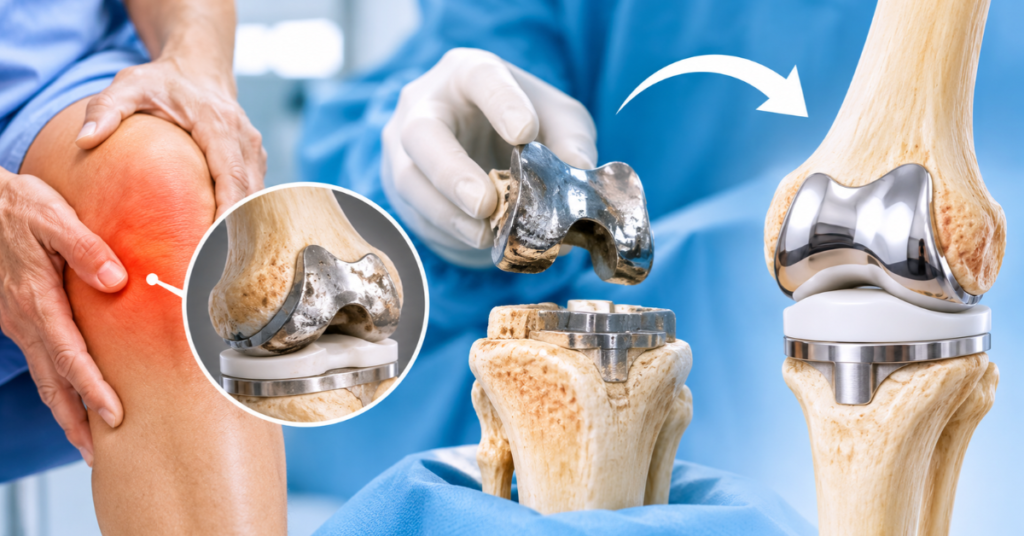
Knee implants are made of metal and a plastic liner (polyethylene). With long-term use, the liner can thin or wear out. Wear particles can irritate the surrounding tissue. In such cases Indore revision knee replacement may be required to provide a smooth stable joint.
How Wear Grows
- over many years of course
- High activity or body weight
- Malalignment of the implant
- Ligaments disbalance
- Material considerations 4.
- Loosening that increases movement at joint
Signs & Symptoms
- Increasing gradually the pain
- Swelling or fluid retention.
- Instability or a feeling of the knee giving way
- Clicking or grating
- The knee’s shape or alignment changes
- Less ability to walk
Why This Matters
Wear debris can cause osteolysis, or bone loss around the implant. Waiting too long can weaken the bone and make revision harder.
Diagnosis
Your doctor will examine the knee and compare X-rays over time to look for thinning of the liner, changes in position or bone loss. CT, MRI with metal reduction techniques, or blood tests may be done, and infection must be ruled out.
Possible therapies
If the implant is intact and only the liner is worn, a surgeon might be able to replace just the plastic insert. If metal components loosen or are damaged, or if they are surrounded by bone loss, a more complete revision with special components and bone support may be needed.
Recovery
You will usually start walking with support soon after the operation and will then have organized physiotherapy. Complete healing may take longer than after a first replacement.
When to seek advice See a Orthopedic surgeon if your replaced knee becomes more painful or unstable, even years after surgery.
Call us to schedule a consultation and get a full assessment and treatment program designed for your knee.