
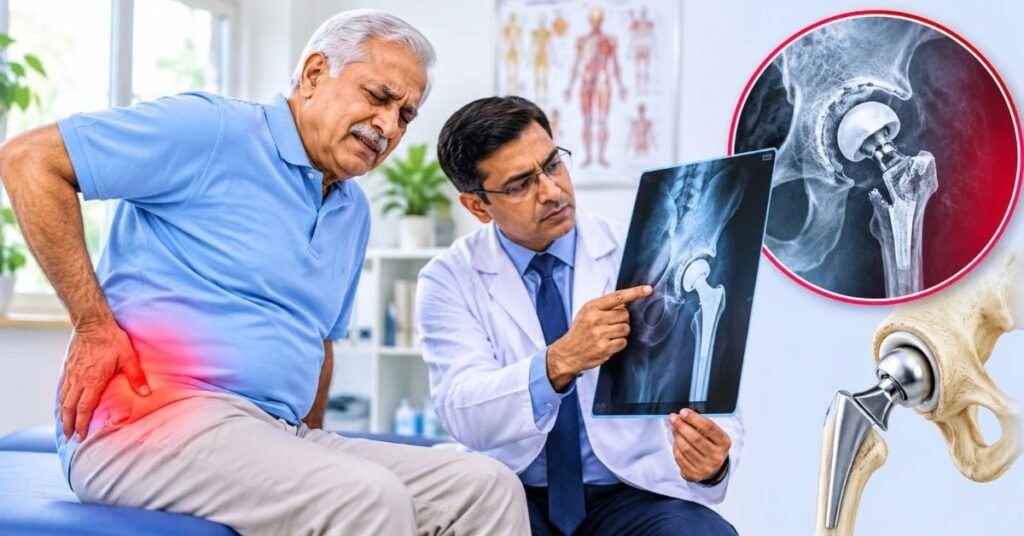
You went through surgery, rehab, and months of work, so it is hard to accept when the hip hurts again. A lot of patients feel anxious, even guilty, like they did something wrong. That usually isn’t the case. There are reasons that implants can fail that have nothing to do with how careful the patient recovered
What Failure Actually Means
When a hip replacement no longer relieves pain or functions properly, it is considered to have failed. It can happen in the first year, or after many years. It may have a mechanical, biological, or infectious cause.
Identifying the Cause First
Good treatment of failed hip replacement in Indore always starts with good diagnosis. Guesswork is not enough. The surgeon will review your history, examine your hip and order X-rays and blood markers. Bone loss or fluid collections may require scans for visualization. The treatment cannot be selected until the cause is known.
Treatment Choices
- Observation and pain control for mild problems
- Physiotherapy and activity modification for muscular causes
- Recurrent dislocation: Brace or technique change
- Antibiotics and surgery to clear the infection
- Implant replacement if parts are loose or worn
This is what surgery is.
When a new operation is needed, the surgeon removes the faulty parts and rebuilds the hip with new components. Grafts or metal support can fill in bone defects. The procedure may be carried out in two stages if there is an infection.
Choose Your Surgeon
A failed hip replacement surgeon in Indore should be a doctor who often deals with these issues and tells them the truth. Ask what the likely cause is, what steps are planned, and what a realistic outcome looks like. Getting a second opinion is often a good thing and a good idea.
A failed implant is a medical problem, but there are solutions. The sooner it is assessed the better the chance of saving bone and function. Please bring your previous operation notes and scans to the consultation.