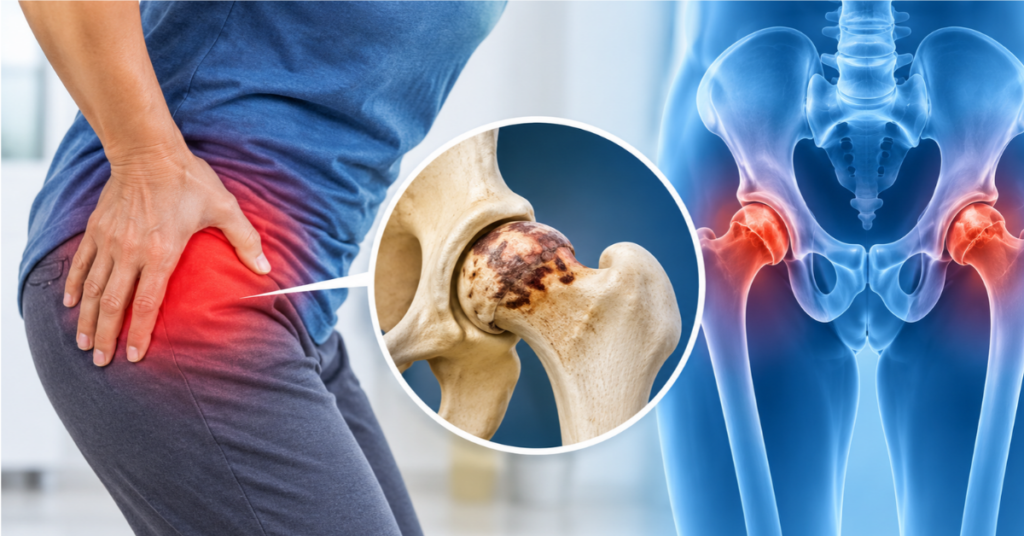
Avascular necrosis of the hip is when the blood supply to the head of the thigh bone is cut off. Without enough blood to supply the bone tissue dies slowly, weakens and may eventually collapse. This can cause pain and arthritis.
How it is formed
The head of the femur depends upon a delicate blood supply. Injury, long-term steroid use, excess alcohol or certain medical conditions can throw this flow out of whack. With the death of bone cells, microcracks occur and the contour of the joint slowly deforms.
Stages of development
- Early stage: little or no pain, X-rays are normal, but MRI shows changes
- Secondary stage: bone begins to deteriorate and pain becomes apparent
- Advanced stage: Collapse of the femoral head and arthritis
Typical Symptoms
- Groin, thigh or buttock pain
- Pain when walking or bearing weight
- Stiffness and restricted hip mobility
- Limping
- Pain at night in late stages
Who Is Risk?
Those taking steroids long-term, drinking heavily, with a history of hip injury or blood or autoimmune disorders are at increased risk. AVN can also affect younger adults and not only seniors.
How Is It Diagnosed?
Diagnosis involves a clinical examination, X-rays, and usually an MRI. Finding it early means more treatment options.
When to Go to the Doctor
If you have persistent hip pain, particularly with risk factors, don’t wait. An avascular necrosis specialist in Indore can assess the stage of the disease and advise on the need for joint preserving treatment or replacement.
Overview of Treatment
In the early stages, treatment can include medications, changes in activity, and procedures to relieve pressure inside the bone. In advanced cases, collapse often requires hip replacement.
Early detection makes AVN more manageable. Getting help from an experienced avascular necrosis doctor in Indore can help to maintain your mobility and avoid long term damage. If hip pain is bothering you, book an appointment.