
Successful Total Hip Replacement for Neglected Post-Traumatic Acetabular Fracture
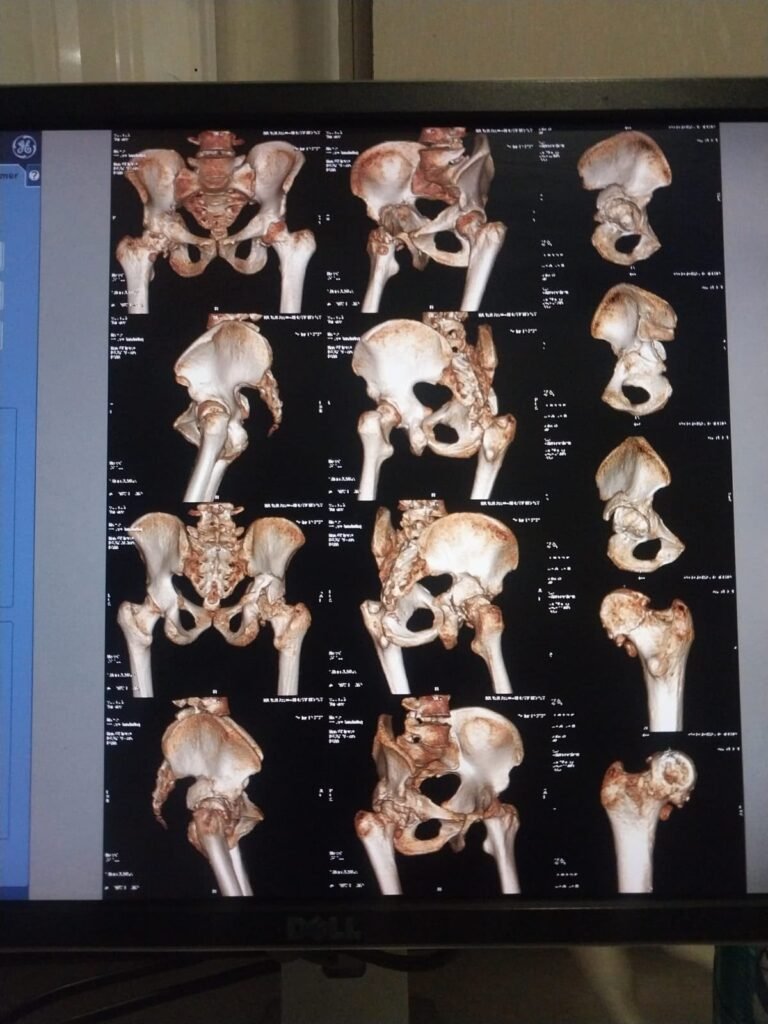
Patient's Initial Condition
Symptoms / Health Concerns
• Persistent hip pain
• Difficulty walking
• Limp while walking
• Dependent on a walker for mobility
• Reduced quality of life due to painful hip arthritis
Duration of Symptoms
The patient had been suffering from symptoms for 2 years following a neglected post-traumatic acetabular fracture
Previous Treatments
The acetabular fracture was initially managed conservatively. Despite treatment, the patient continued to experience persistent pain, limping, and dependence on walker support.
Diagnosis
Final Diagnosis
Neglected post-traumatic acetabular fracture with secondary post-traumatic hip arthritis and significant acetabular bone defect.
Tests / Scans / Investigations
• X-rays of the pelvis and hip
• Pre-operative blood investigations
• Clinical orthopedic evaluation
• Routine pre-anesthetic fitness assessment
Treatment Details
Total Hip Replacement (THR) with Acetabular Bone Defect Reconstruction
Duration: The patient underwent a single-stage Total Hip Replacement procedure followed by routine post-operative rehabilitation.
Advanced Techniques Used
• Autologous cancellous bone graft harvested from the excised femoral head
• Reconstruction of the deep acetabular bone defect
• Press-fit acetabular cup implantation
• Additional fixation using two acetabular screws
• Stable femoral stem implantation
Results & Recovery
Patient Improvements
Following surgery, the patient experienced significant improvement in mobility and hip function.
• Pain significantly reduced
• Improved hip stability
• Able to walk comfortably with walker support
• Improved quality of life
• Early functional recovery achieved
• No evidence of implant loosening or subsidence at 6-week follow-up
Recovery Duration: Early recovery was observed within 6 weeks, with continued rehabilitation and gradual functional improvement.
Final Outcome
The Total Hip Replacement was successful. Radiographs confirmed a well-fixed acetabular cup and femoral stem with excellent implant stability. The patient achieved satisfactory early recovery and improved mobility.
Returned to Normal Activities: Yes
Case Highlights
What Makes This Case Unique
Management of a neglected 2-year-old post-traumatic acetabular fracture with severe bone loss using Total Hip Replacement and autologous femoral head bone graft reconstruction.
Complex / Rare Factors
This was a technically challenging case due to:
• Two-year neglected acetabular fracture
• Severe post-traumatic arthritis
• Deep acetabular bone defect
• Associated hypertension
• Obesity (approximately 100 kg body weight)
Most Significant Benefit
Successful restoration of hip stability, pain relief, and improved mobility through advanced acetabular reconstruction and Total Hip Replacement.
Conclusion
This case demonstrates that even neglected post-traumatic acetabular fractures with advanced secondary arthritis can be successfully treated using Total Hip Replacement combined with autologous femoral head bone graft reconstruction. Careful surgical planning and modern reconstruction techniques restored hip stability, relieved chronic pain, and significantly improved the patient's mobility and quality of life.